
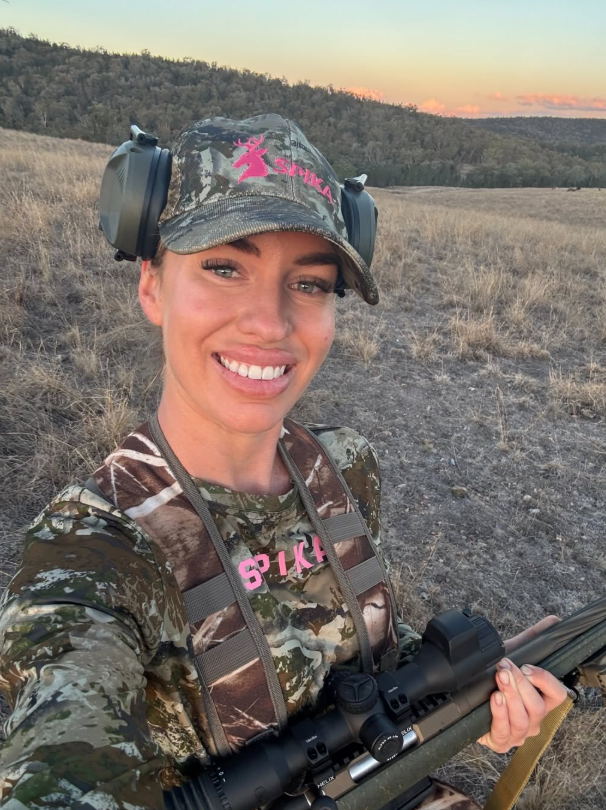
Podcast · First Deer · Solo Hunt · Latest Episode
From Observer to Hunter — Emma's First Solo Deer Hunt
Two years. A rifle licence, a beginner course, a goat, a new rifle, and a week alone in the Queensland bush. This is what it looks like when the plan finally comes together.
Emma didn't grow up hunting. She didn't have friends who were into it. She didn't even know anyone who owned a gun. When the idea first took hold — this pull towards going out and actually harvesting her own food — she had almost nowhere to start.
So she started from zero. And two years later, she's sitting on the other side of her first solo deer hunt, a white fallow doe in the back of the ute, and a story worth telling.
It started with food — and always has been
The thread that runs through everything Emma does is food. She's a crabber. She fishes. She went out and got a tinny so she could gather more of her own. Hunting was just the next logical step in that same direction — a way to understand where her food comes from and to be the one responsible for it.
The moment it clicked was watching a colleague take a deer on her very first hunt as an observer back in early 2024. She watched the shot, the field dress, the whole process — and instead of being put off, something in her sparked.
"It's the same reason I took up crabbing and got a tinny so I could go fishing. It was always about gathering food. Seeing it happen for the first time, I went — yep, this is what I want to do."
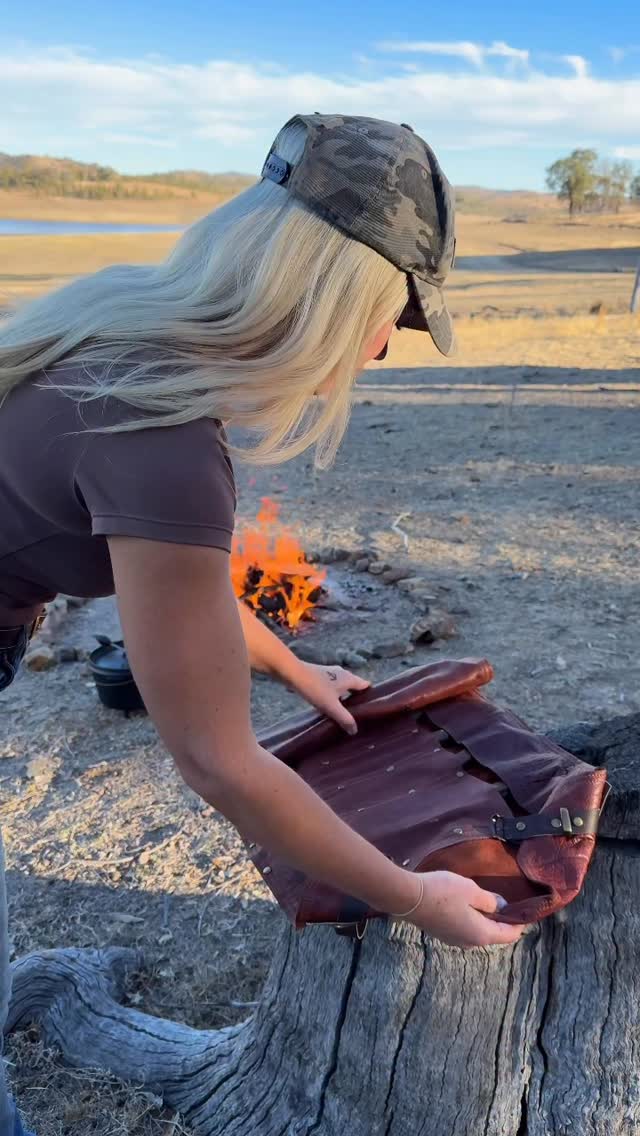
The Nature's Perks course — and where we met
Emma came to a Nature's Perks beginner hunting weekend north of Brisbane having done almost nothing hands-on at this point. One observer hunt. That was it. The main thing she wanted from the weekend was the butchering — understanding the cuts, the technique, how to break an animal down properly.
She got that and more. Elbows deep from the start, learning to field dress, asking every question she'd been storing up about wet aging versus dry aging, which cuts to keep, how long to hang. Having Lawson there with his butcher background meant she could ask the questions you can't easily google.
It was also where the two of us met — the only two women on the weekend, immediately gravitating towards each other in the way you do when you're a bit new to something and grateful to find a familiar face.
"When you walk into a party you hope you'll find common ground. But at events like this, you immediately know you've got something in common. There's so many things you want to talk about."
The first goat — putting the skills to use
A few months after the course, Emma went out to a property with a healthy feral goat population and the intention of doing it herself for the first time. She chose goats deliberately — smaller than deer, good practice for the butchering, a more forgiving starting point while the field dressing skills from the course were still fresh.
She spent the first couple of days just walking the property, watching the herd, getting familiar with how these particular goats moved. They were wary ones — not the kind you can walk right up to. Towards the end of the trip she took a small nanny, carried her back to camp, hung her up, and got to work.
It went well. And more importantly — it gave her confidence. She now knew she could do this.
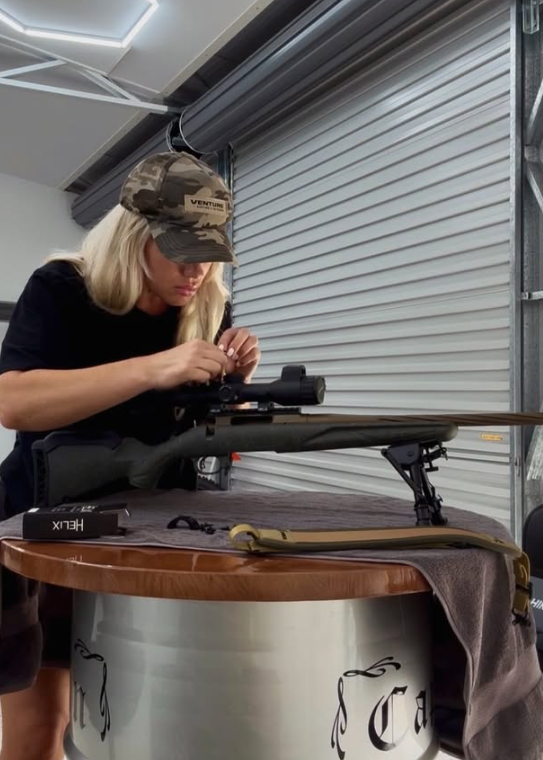
The new rifle — buy once, cry once
After the goat, Emma knew she was in this for real. She upgraded from her .223 Taipan to a Ruger Gen 2 Predator in 6.5 Creedmoor — a fluted barrel, adjustable stock, set up exactly how she wanted it. She went with a Hikmicro day/night digital scope, a thermal monocular, and spent the months from December through to April dialling everything in before she'd even think about going out for deer.
That preparation — methodical, deliberate, unhurried — is very Emma. She wasn't going until she was ready.
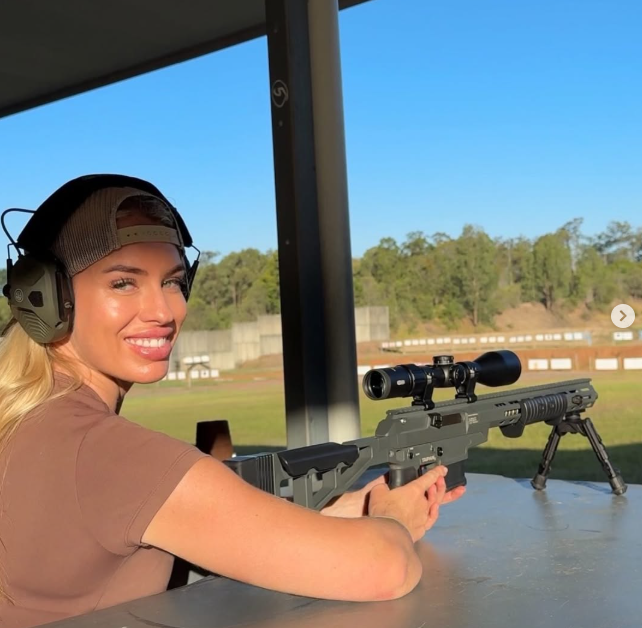
Texas, Queensland — the solo deer hunt
She set aside a week on a property near the Queensland-New South Wales border, about an hour southwest of Stanthorpe. She'd never hunted it before. She'd just been told there were fallow deer on the property and gone from there — weeks spent pouring over topo maps, identifying water sources, planning approach routes before she even packed the car.
She arrived on the Friday. By 4:30 Saturday morning she was up, geared up, dog ready, heading to the paddock she'd spent weeks planning around. She came over the crest of a hill at first light and walked straight into a group of five does standing about 40 metres away.
"I just thought — what a good omen. I couldn't believe I was seeing them in real life and so early. I just stood there and watched them for a bit."
That same morning she also spotted a fallow stag — her first ever — working the tree line on a grassy hill. She watched him rub on the trees and just stood there, completely still, taking it in.
She spent the next four days on foot, covering ground, learning the property, watching two separate mobs of deer to understand their patterns — where they drank, where they fed, where they bedded down. She also took a pig on that first morning, close range, unhurried. The pressure was off. Now she could be patient.
Choosing her deer — and making it count
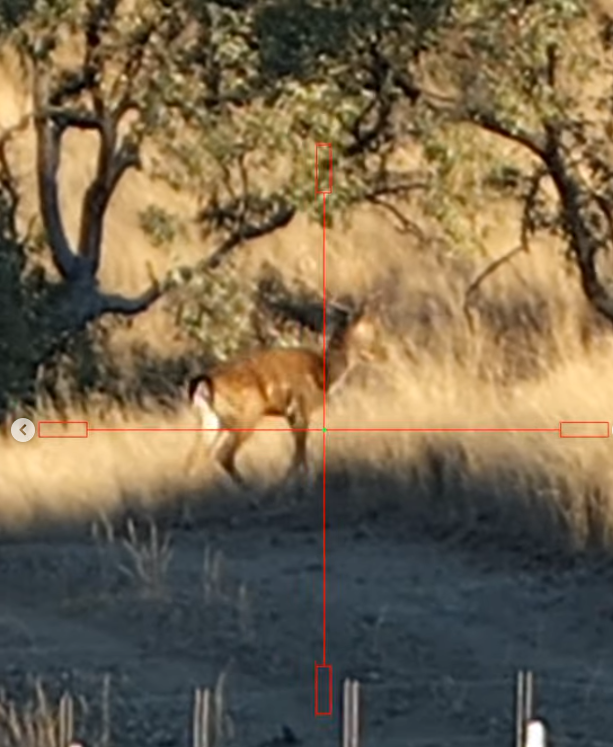
Emma had been watching a particular white fallow doe across the week. She knew her behavioural patterns, knew her bedding area wasn't an unreasonable carry from the nearest road, and knew she was the right size to break down alone.
"This might sound a bit woo-woo, but of all the deer I saw over that week — I just felt like that's the right one. And that's not something you can really explain."
On the second last day, she set out knowing it was the day. The doe made her work for it — she was further away than she'd ever been from her bedding area, across a creek and out in a grassy paddock. Emma approached through the trees with the wind in her favour, the sun lighting the deer up in front of her and casting Emma in shadow behind her. She got to within 60 or 70 metres, set up against a tree, seated, rifle resting on her knee.
She waited until the doe looked up from grazing and took the shot. It landed just a touch low on the shoulder — not the perfect shot she'd planned for. A second shot, a headshot at close range, and it was over. Clean, calm, and humane. Within 25 seconds.
The moment after
What Emma describes next is the part that's hard to put into words — and she knows it.
"I sat with her for a moment and just had a bit of quiet reflection. I just took a moment to say thank you. I was grateful for the life I'd just taken and how that was now going to sustain me. I was just right there, at that moment in time. Feeling very present — which is very difficult in modern day life."
She sat with the deer before she did anything else. Not for long. But long enough to feel what had just happened — the gratitude, the connection to the landscape, the weight of the moment. Then she got to work on the field dress.
"Now I say — I'm a hunter."
Before this trip, Emma says she would have described herself as "interested in hunting" or "learning to hunt." Hedging language. A little bit of distance from the label.
Not anymore.
"Now that I've done this and achieved this, I think I would be proud and comfortable to say — I'm a hunter. I feel like I've earned my stripes. I put the time in and I achieved it."
What she'd say to anyone sitting on the sidelines
Emma's advice is simple, and it's the kind that stays with you.
"The time is going to pass anyway. You might as well spend it doing what you want to do. Doesn't matter how long it takes to get there — every day, just do another little step."
This episode is everything this community is about. Real stories. Real learning. A woman who started with nothing and built her way there — step by step, season by season — and who is now standing on the other side of it with a freezer full of meat and a story she's proud to own.
Thanks Emma. You've absolutely earned it.
🎙 Women Who Hunt Podcast — Latest Episode · 8 min listen
Listen to the full episode
Emma — from observer to hunter, her first solo fallow deer.