
"All I Can Say Is Practice, Practice, Practice" — Lynda's Story
A cotton farmer's daughter whose first hunt nearly finished her, who went back to Africa to beat the hoodoo, and who now runs a Queensland station where strangers are family members you haven't met yet.
We met Lynda Johnson around a campfire at Nyora Station, and by the end of the night her stories were too good to keep to ourselves. So, without actually asking her first, we told her she was coming on the podcast. Thankfully, she said yes.
What follows is one of the most honest conversations we've had on Women Who Hunt. Lynda talks about the hunt that went wrong, the husband who wouldn't let her quit, the eland that walked into the waterhole instead of the oryx, and the giraffe that fed an entire village. Then there's Nyora itself, a property in the Queensland bush that she and Brad never planned on buying and now can't imagine leaving.
A Cotton Farmer's Daughter
Hunting had nothing to do with Lynda's childhood. She's a cotton farmer's daughter from Emerald, Dalby and Cecil Plains country, which she describes as "not really hunting territory." That changed when she met Brad close to forty years ago. He's always been a hunter, and for a long time Lynda simply followed wherever the boys went.
She only took it up for herself around 2018. "My collection is pretty quick," she laughs. "It's a rapid one." Once she started, it quickly became a quiet competition: who could take an animal cleanest, with the fewest shots fired.
"You Can Hit That, You Can Hunt"
When Brad started travelling the world on hunting trips, Lynda got sick of being left behind, so she went along as the camera person. On a trip to Namibia someone handed her a rifle and pointed her at a cardboard box. She hit it. Everyone decided that if she could hit that, she could hunt.
A cardboard box isn't an animal, though. Put on the sticks with a real animal in front of her and everyone watching, Lynda started to shake. Her shot on an oryx went into its knee, and she had to pay for that animal. There were three similar moments on that trip.
"I came home going, I'm never shooting again. I'm never gonna touch a rifle again. I was done."
— Lynda JohnsonShe didn't expect the nerves. "I was too cocky," she says. There's the animal, the expectation that everyone around you can do this, and the question of what happens if you can't. She tells this story openly because, as she puts it, hunters can be a bit like gamblers: they only tell you about their wins. Not having practised, she says, was her biggest fault.
Rocks, Trees and Stumps
It was two or three months before Lynda would even think about picking up a rifle again. Then her "very talkative, very, very passionate husband" told her she couldn't quit. If she was going to do this, she had to practise.
So every afternoon after work they headed out and walked as if they were moving through the bush. Brad would set up the sticks and pick a target: that rock, it's your animal. That tree. That stump. What they were drilling was the surprise. Shooting something you've been staring at is one thing. Holding it together when an animal appears out of nowhere is another, and Lynda says there's no real way to explain that adrenaline rush until you've felt it.
Redemption at the Waterhole
In under a year she was on a plane back to Namibia. Partly it was to beat the hoodoo. There's an oryx out there somewhere that, in Lynda's words, needs a knee replacement. Partly, she admits, it was embarrassment. "I thought I could do it. Everybody else around me thought I could do it when I was shooting a box."
It was 2019 and the country was in drought. Lynda still wasn't convinced she could pull the trigger, so they sat for hours in a blind high above a water point, watching animals come and go and dry-firing to take the nerves out of it. That turned out to be very calming. No shot needed to be taken. It was pure practice.
Then the guide went quiet. When an eland puts weight on its feet the toes spread, and when it lifts them they snap back together with a click. He'd heard it coming. The oryx never showed, but an eland walked in. Lynda tried to hand the shot to the boys, and they told her she was the hunter: her shot, or nobody's.
She remembers her brother-in-law's voice telling her to stay in the scope and watch the shot land, and she did. It was a good shot. The bull bucked "like a good old rodeo bull," and when the boys called for her to reload, she was shaking too badly to do it. The guide reloaded for her, she lined up again, and with the light going she made sure it was quick. Then she had to climb back down the ladder from the blind, convinced the whole way that she was going to fall.
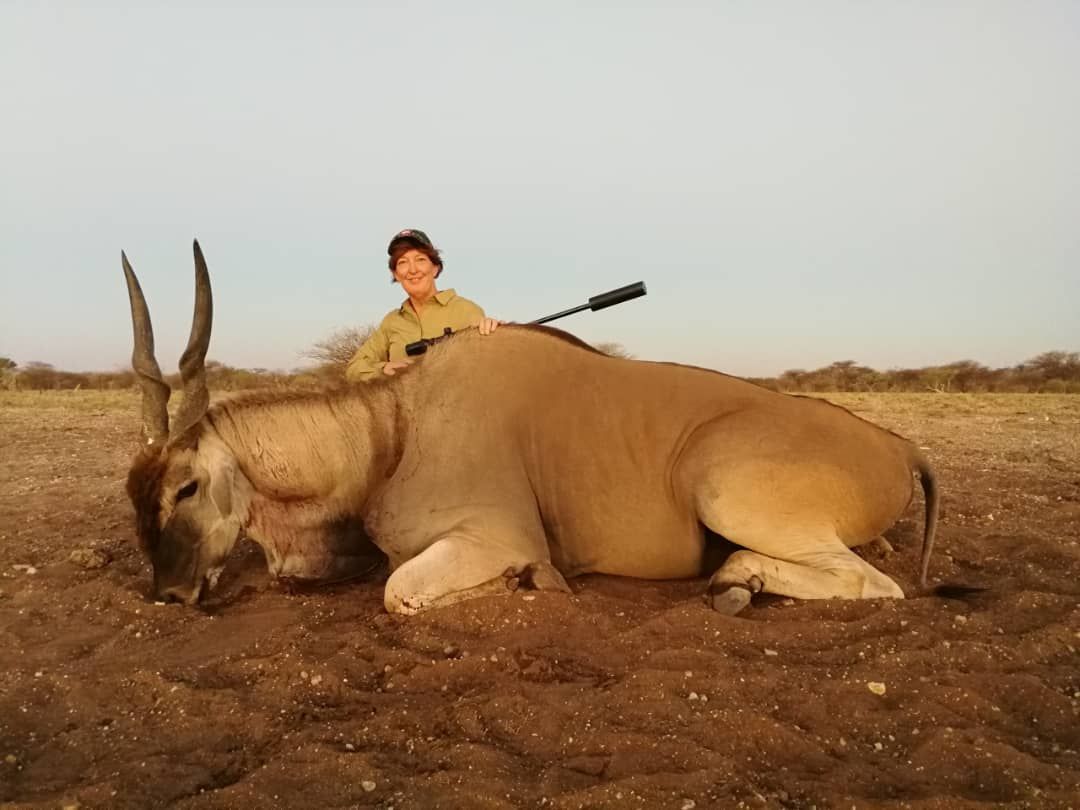
Walking up to him, she compares it to having a baby: look what I have done. Seven years on, she can still feel the shot every time she hears the video.
"Still remember getting the shakes, trying to reload the rifle, lining it up, thinking please don't stuff this up. I can't do this again."
— Lynda JohnsonDid it feel like redemption? Yes, she says. I can do this. I'm not a complete failure. But that oryx is still out there, and she won't put it to bed until she's been back for him. It all comes down to preparation, she says, whether you're in Africa, New Zealand or here at home. "You don't just get out of the car and go."
The Wall Behind Her
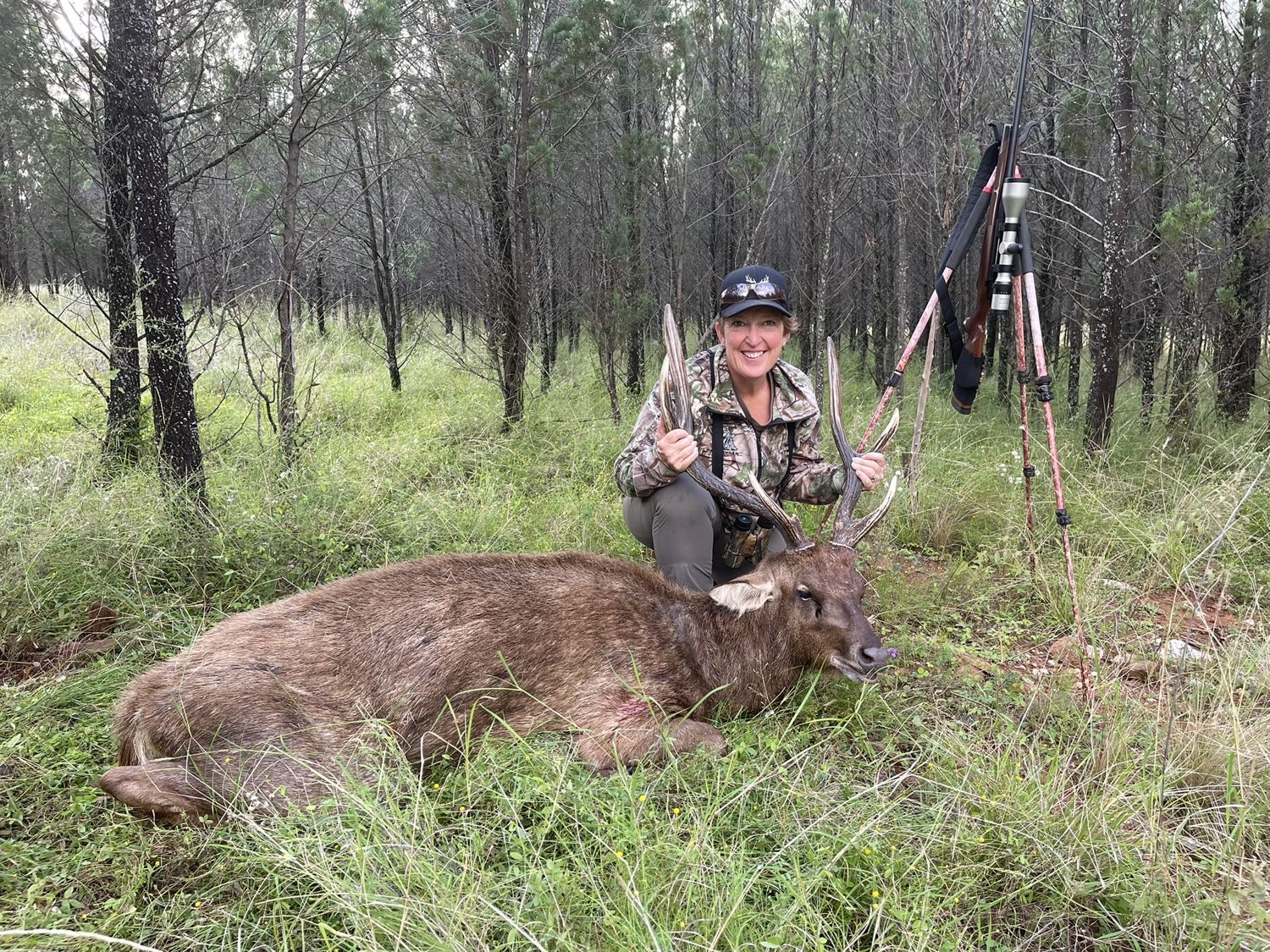
If there's one episode you watch on YouTube rather than just listen to, make it this one, because of the wall behind Lynda. Directly above her head is her first deer at Nyora, a rusa stag that walked onto the road in front of the car as she drove home. She asked Brad if she could grab a rifle. He told her she had to hunt it properly. So she let him walk off, got up with the sparrows the next morning, and found him about two hundred metres from the house. "A bit of a cheat, really," she grins. "But he was very, very pretty."
Beside him hangs her daughter's deer, named Jeff for reasons nobody can explain. There's also the first deer she took with the Weatherby .308 Brad bought her, on a friend's place up near Nanango, and a big stag from a neighbour's oat paddock. She had to cape that one out herself. That was the rule.
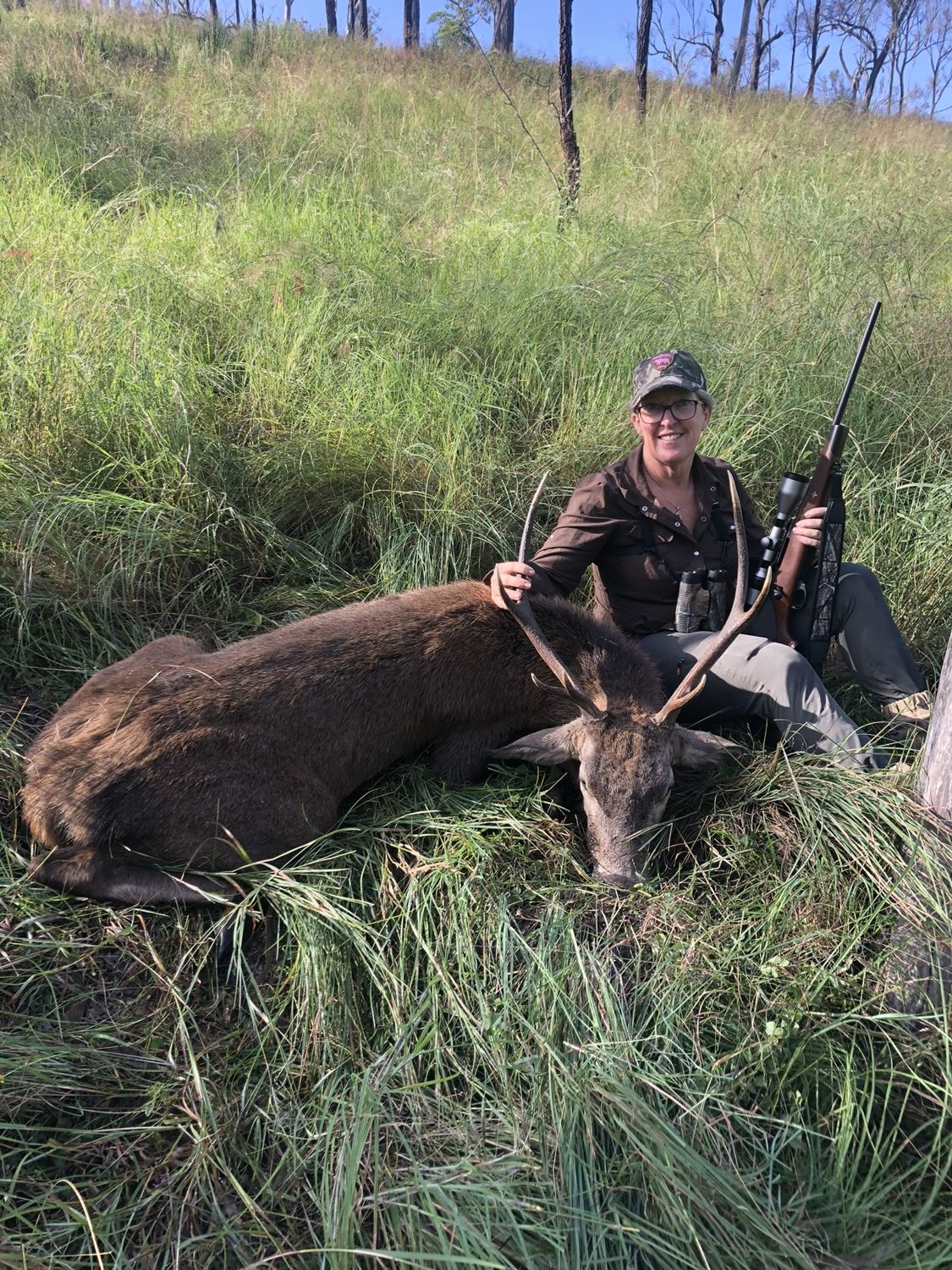
The only thing she still struggles with, oddly enough, is the warmth. She's used to working with carcasses that have hung in a cold room for a couple of days, when it's just meat. When an animal has only just hit the ground, it's different. "You've just taken a life," she says. "It sounds a bit weird putting it that way." Then again, she points out, it doesn't get any more free range or organic than that.
Venison Is Everyday, Beef Is a Treat
In the Johnson house, venison, buffalo and camel are just part of life. Ostrich turns up too, softer than you'd expect. Beef is a treat, and lamb is rarer still. The grandkids have grown up on it. They arrive asking what's for dinner and whether they can tell their friends and their teacher. If there are leftovers, they want them for school lunches.
That sometimes causes trouble. When one granddaughter started at a new school in Brisbane, her mum was called in because the teacher thought she was making things up. She'd been telling everyone her Pop had buffalo, camels and donkeys. A few photos and a show-and-tell sorted it out, and the new kid didn't need to invent anything to be the cool kid.
"I don't know whether they'll all be hunters, but they all will know where their food comes from."
— Lynda JohnsonThat matters to Lynda. She'd much rather an animal roam a paddock living its life, and then its life is over, than spend it in a small pen being force-fed. She reckons homegrown potatoes, corn and tomatoes taste different too, picked when they're actually ripe.
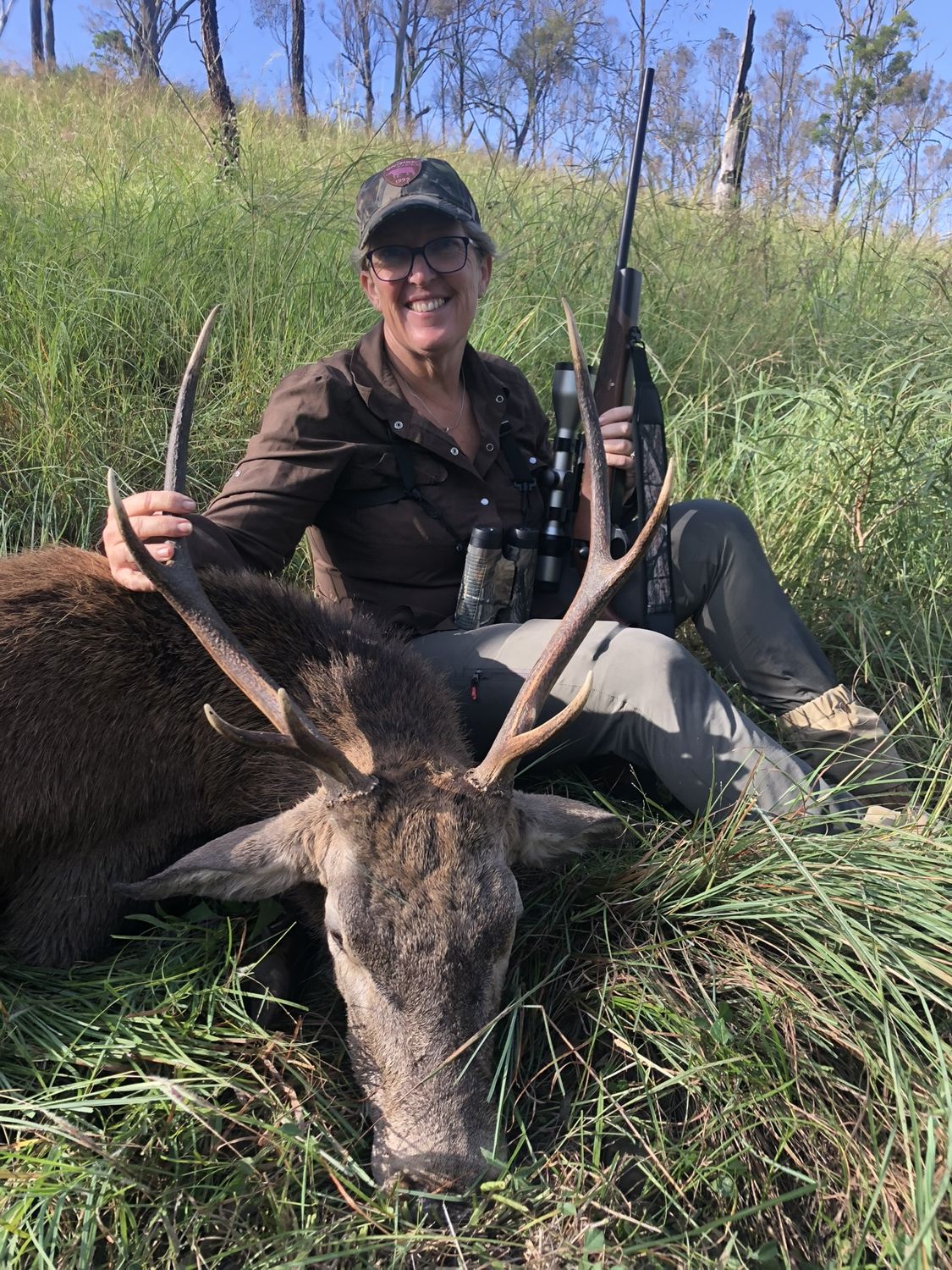
A Red and a Fallow Across the Ditch
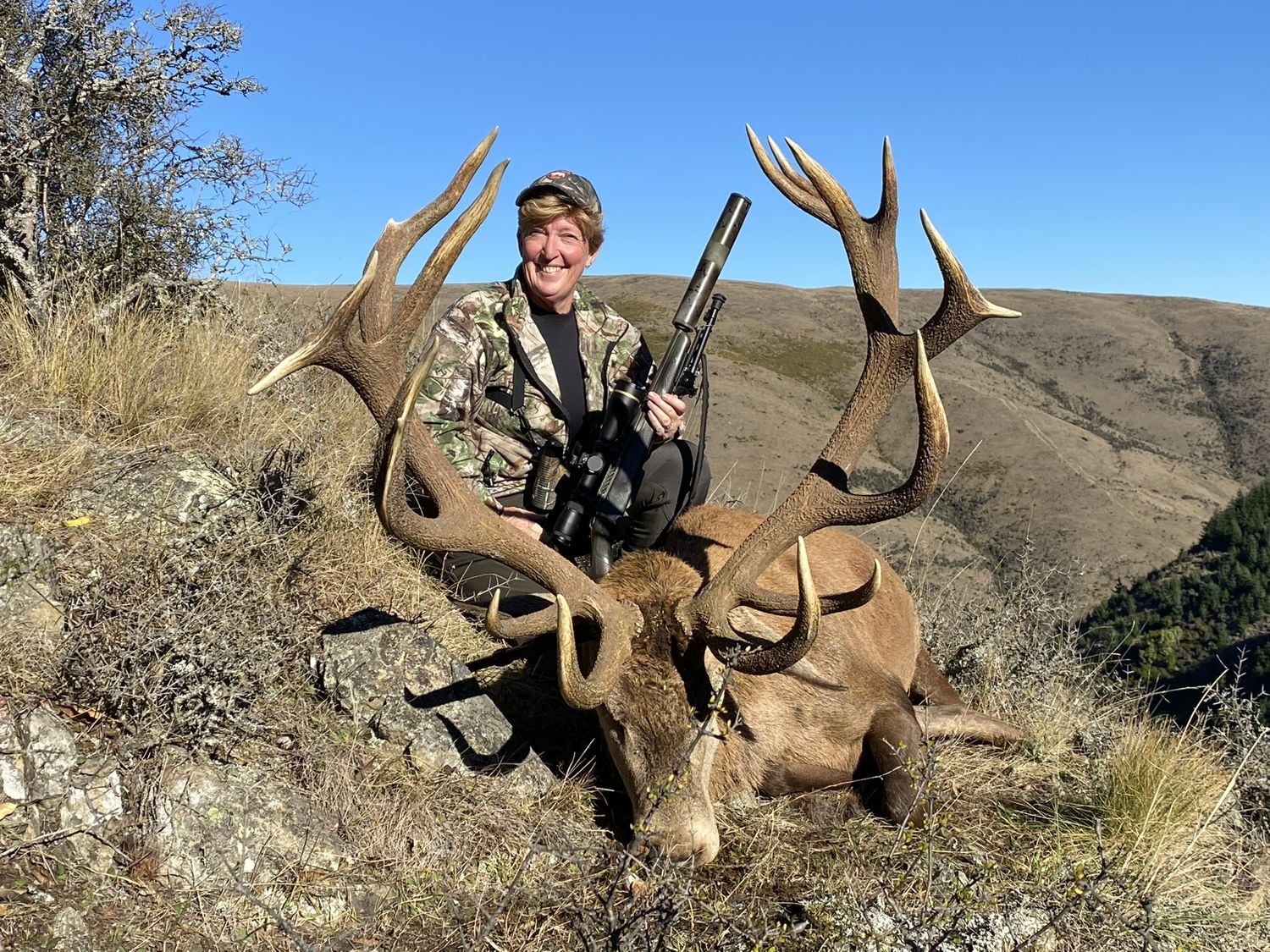
When Queensland and New Zealand opened their travel bubble in the middle of COVID, the Johnsons jumped on it to break the monotony. They booked a package for a red and a fallow each. It's expensive, Lynda says, but worth every bit. Different genetics and different feed grow heads you'd swear can't be real when you see them online. Some of them are.
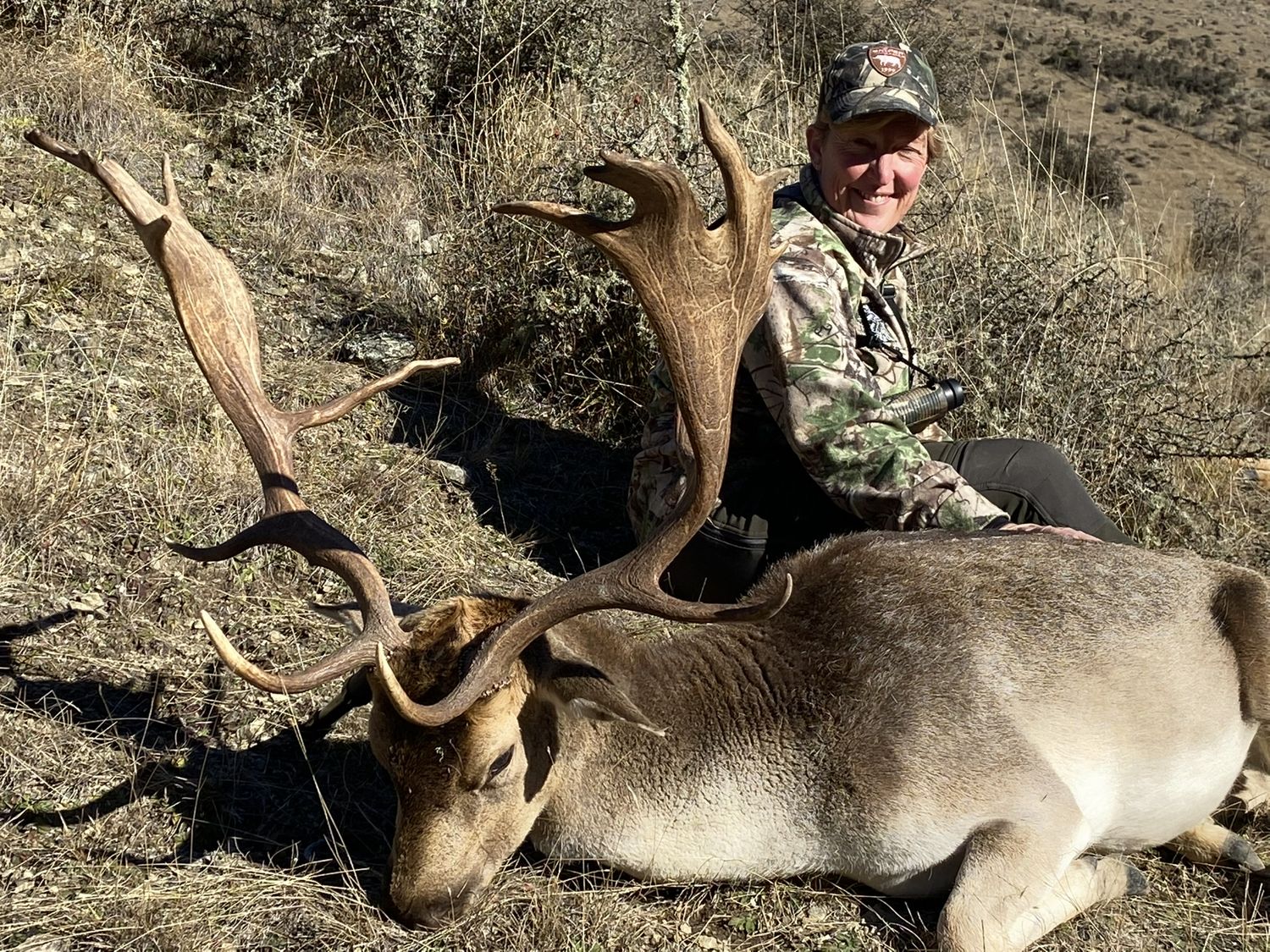
She's quick to add that Australia has some pretty impressive heads of its own. With a bit of luck, Nyora will soon have chital too, which would make four deer species on the place.
One Giraffe, a Whole Village
Their 2020 Namibia trip had been organised and paid for before COVID cancelled it, so they went as soon as travel opened again. Brad was chasing a Cape buffalo. Lynda took a zebra, which she says was "more like shopping for a nice hide." There were thousands of zebra, and every one she picked, the boys told her was a female. Zebra meat, she says, is very lean, deep red and rich, a little like donkey, and she'd happily go back for a second plate. Warthog is the one she'd skip.
The story she tells when people ask why she hunts, though, is the giraffe. In Namibia's conservancies, each village manages its own area, and when a hunter takes an animal there, the meat belongs to the village. Lynda kept the trophy, and she went for the engine room. Always heart and lung.
She thought it was just their party of about eight out there. Then people appeared from everywhere. When she tried to help with the skinning, they nudged her out of the way because they were faster and better at it. They skinned one side, laid down sticks and branches, and rolled the animal over so the meat stayed clean of sand. They took the bones, dried the meat and made soup from the intestines.
"Nothing left on the ground. There's nothing but the blood stain on the ground. They take everything."
— Lynda JohnsonShe reckons that one animal fed around a hundred people for weeks. Compared with the roadkill she sees along Australian highways, it changed how she thinks about abundance. "We just have so much," she says, "and so much waste."
If you're thinking about Africa for the first time, Lynda recommends Namibia, which she calls "Africa for Dummies." Go guided, reach your destination before dark, don't drive at night, and never run over the elephant poo. Elephants eat thorny bushes and don't digest the thorns, so that's a flat tyre. Changing a tyre in lion country is not where you want to be.
"We Didn't Just Get the Deer, We Got the Farm"
Nyora started with a meat hunt. Brad went out to the local hunting property with his nephew to shoot a deer for the freezer and got talking to the owners, Jim and Debbie, who said they were getting to the point of thinking about selling. He came home saying how amazing it would be. A couple of months later the phone rang. "Come on, we'll just go have a look," he told Lynda, knowing full well that once she saw it she wouldn't want to leave.
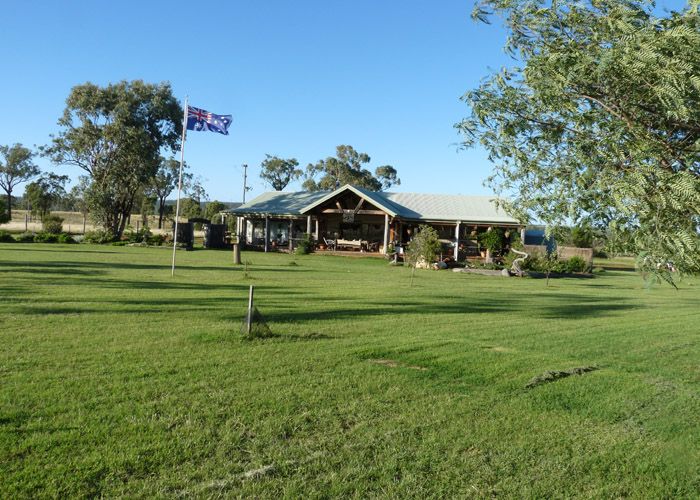
Her first thought driving in was that they were way out in the middle of the never never, and she didn't want to drive that road every day. Now she does.
"It was pretty much straight away: we can do this, we can make this work. It did feel like home."
— Lynda JohnsonShe asked Debbie how she managed welcoming complete strangers into her home. Debbie's answer has stayed with her ever since: they're not strangers, they're family members you haven't met yet. "You have your family family," Lynda says, "but you also have your hunting family." Their own kids' reaction was a bit more blunt: seriously? Don't you have enough to do?
Lynda's Little Zen Zone
Lynda calls Nyora her little Zen zone. She loves watching the stags drop their antlers and grow them back, and everyone goes hunting for the casts in the paddocks, kids and grown-ups alike. Baby water buffalo are born more pink than grey and completely hairless, then turn fluffy and fuzzy, then lose it all and become "a barrel with legs." There's also what she calls goat kindergarten: a couple of nannies calling while a dozen kids run the other way or butt heads on top of an ant hill.
When the roar is on, she and Brad race home from work, pack a few drinks in the Esky and go and sit in the middle of a paddock. They turn off everything that makes a noise and just listen in the pitch black to the stags roaring and antlers clashing. This year was too dry and the reds barely roared, but the fallow had their best croak session in five years. Honestly, Lynda would rather do the wine-and-cheese version than hunt it, or string a hammock between two trees and wake at two in the morning wondering what that noise is.
So why do hunters fly in from all over the world? Lynda says it's the whole package. They keep numbers small and try not to run more than one group at a time, so you get the place to yourself and nothing is rushed. Everything is tailored to the person. You eat game meat the whole stay, you practise, you walk a lot if you're up for it, or you spot and stalk from the buggy. You process your own meat and relive the hunt over and over. Sometimes you even get roped into a bit of fencing.
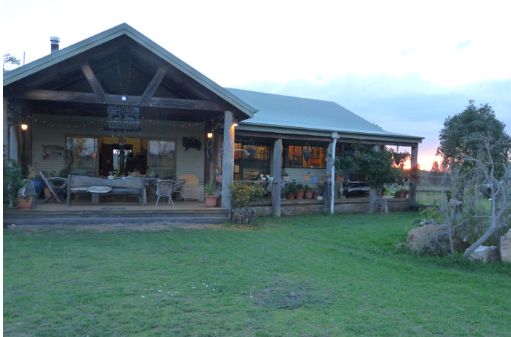
"There is something about it that just lowers the stress levels of whatever else is going on. It just disappears."
— Lynda JohnsonNo Such Thing as a Silly Question
Asked what it feels like to be a woman championing hunting, Lynda doesn't make a big deal of it. If you want to try something, try it. There are plenty of supportive people out there, and there's no such thing as a silly question. If something isn't part of your life path, the only way to understand it is to ask. Hunting isn't for everyone, she says, and nobody has to do it. But there's no reason women can't.
Her thank-yous go first and foremost to Brad, then to her brother-in-law Scott, who talked her round when she thought her hunting career was over, and to Chris Waters for helping them no end. She also thanks the wider community of people who've swapped stories with them along the way. "Everyone has an impact," she says. "Everyone shares a story."
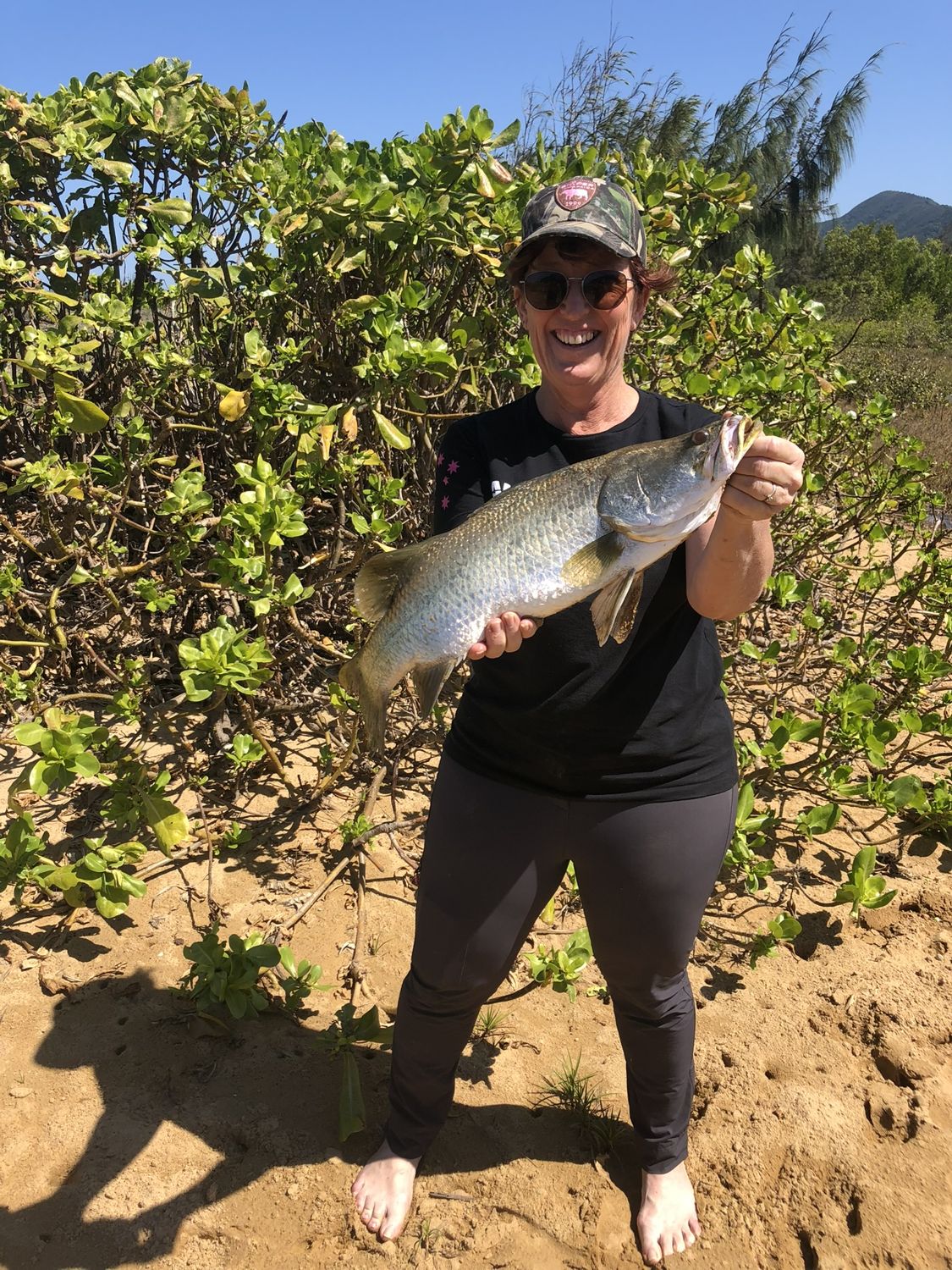
When people think of Lynda Johnson, she hopes they remember a helpful person who was of some assistance to someone on their journey. Lynda, you've been that to more people than you know, and you're certainly that to us.
Visit Nyora Station
Nyora Station is near Millmerran on Queensland's Darling Downs. It's in the middle of a name change, so for now you'll find it, and book, under Havago Australia. Tell them Women Who Hunt sent you.
- Website: havagoaustralia.com.au
- Email: havagoaustralia@gmail.com
Listen to Episode 39
Lynda Johnson on missed shots, redemption in Namibia and finding home at Nyora. And watch it on YouTube for that wall.