
"Not Today, Darling" — Beth Holleley's Hard-Won Deer Hunting Lessons
Wild Deer magazine's Beth Holleley has spent thousands of hours chasing sambar and fallow. She's made the mistakes so you don't have to, and she's here to hand over everything she's learned.
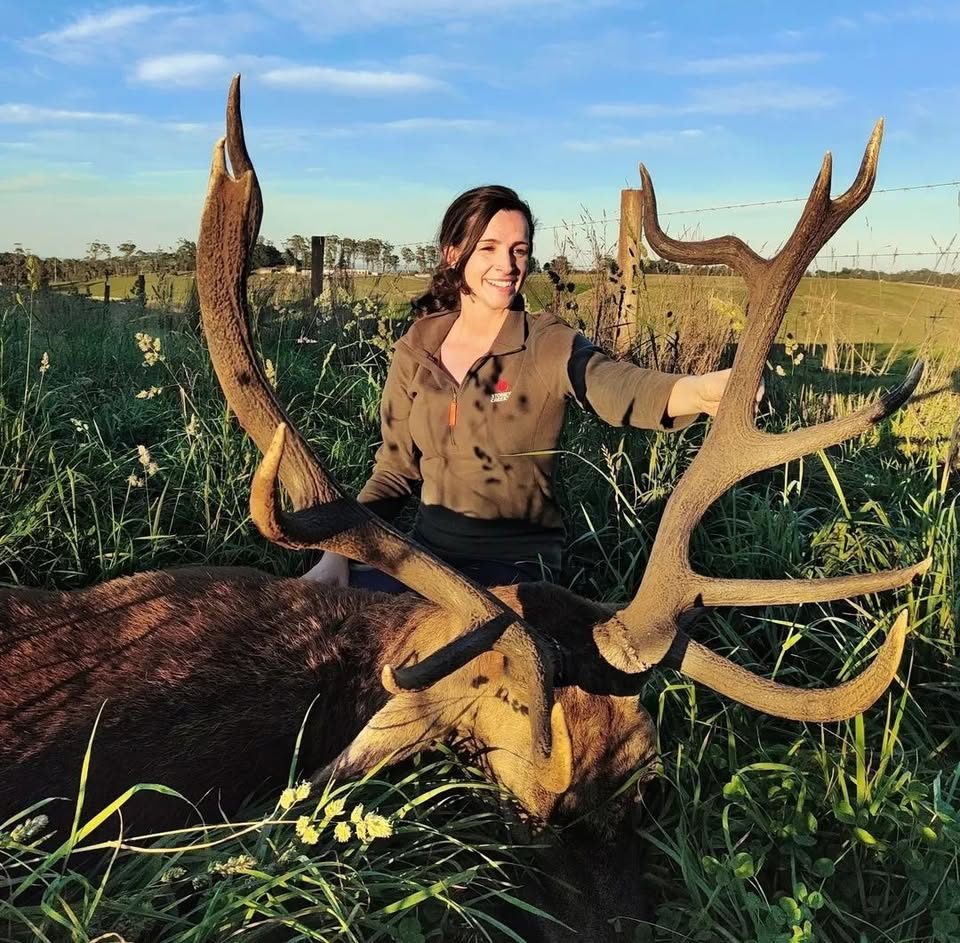
Beth Holleley spent seven years listening to deer hunting stories before she'd agree to go on one. When she finally did, she planned to close her eyes and block her ears if anyone pulled a trigger. Today she's an obsessed, mad-keen deer hunter, the force behind the pages of Wild Deer magazine, and one of the most generous teachers you'll meet in the bush.
This episode is a masterclass for beginner and intermediate hunters. Beth came with a list, and it's all things she's either done wrong herself or watched other people get wrong. Gear, shot placement, breathing, wind, reading the bush, closing the distance, butchering, carrying meat out and, most importantly, what to do in the seconds after you take the shot. Grab a notebook.
Seven Years Before Her First Hunt
Beth was born in Wagga Wagga and spent her early years on farming land before her family moved to the Victorian coast when she was seven. As a coastal kid, she never learned to shoot rabbits or foxes. Hunting came into her life through her then-partner's family, who went deer hunting almost every Saturday. His dad had taxidermy on the walls and a story for every mount, and Beth, who loves learning, soaked up everything about each species.
What she didn't want to do was watch an animal get shot. So when her father-in-law finally invited her out, he picked a spot where they rarely saw deer. She went along on the condition that she could look away.
It wasn't what she expected at all. Sitting on a ridge above a creek system as the afternoon light changed colour, listening to birds, watching a wallaby play without knowing anyone was there, hearing two sambar stags clash antlers somewhere in the scrub, and then being honked at on the walk out. She left with a sense of peace she hadn't anticipated.
"We're not supposed to be in four walls. We're supposed to be out walking and exploring nature, quietly, and appreciating it. Hunting's a really good channel for that."
Beth HolleleyThat tuning in isn't just good for the soul, she says. It's how you find deer. If you're thinking about work, you might miss the stick that breaks in the scrub, and there are only so many animals in the bush heavy enough to break a stick.
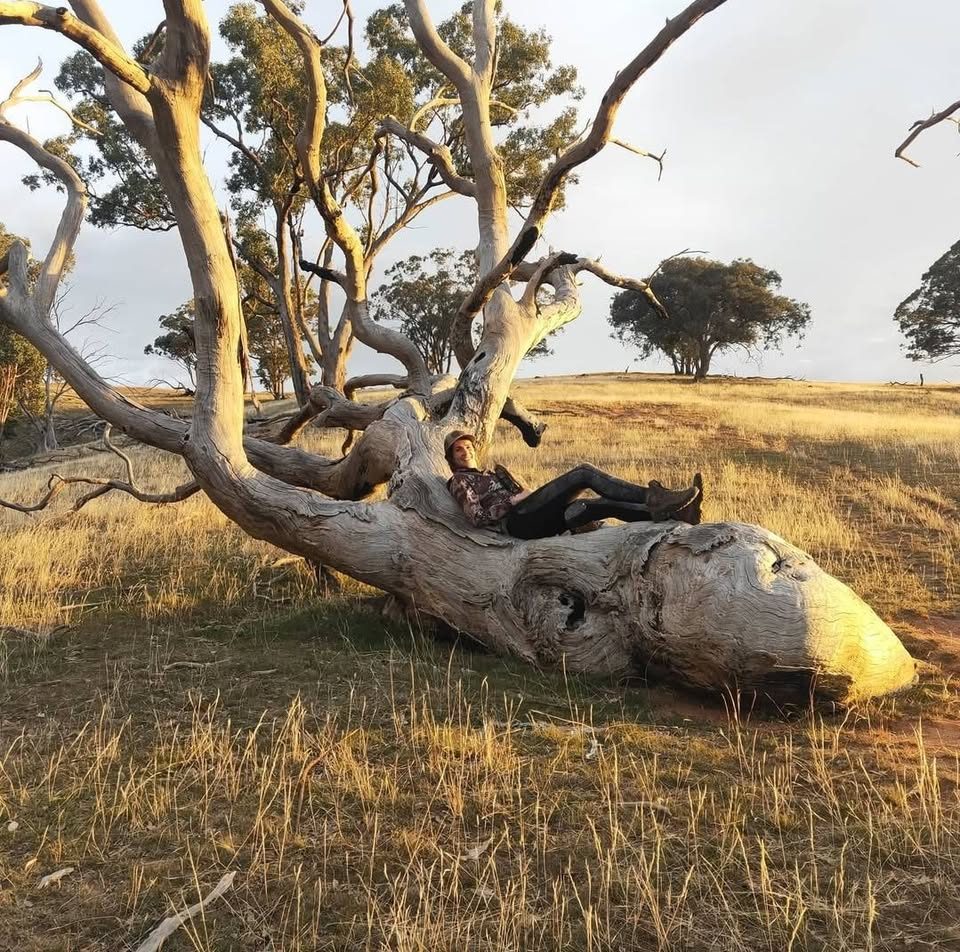
The Gear That Actually Matters
Beth's first piece of advice is about money. When you're starting out, it's easy to spend thousands on gear that turns out to be irrelevant. Her list of non-negotiables is short.
Beth's three things worth spending on
- Boots with ankle support. Roll an ankle in remote country with a deer on your back and you're in serious trouble. They don't need to be $600 boots, but please don't hunt in Converse or runners.
- A rangefinder. Beth used to guess 150 when the real answer was 300. Knowing the actual distance is the difference between an ethical shot and a bad one.
- A bipod. If you're shooting at distance, especially lying down, you'll never regret putting one on your rifle.
Everything else can wait. Camo can come from Kmart or the exercise section of any shop. Greens and browns in the bush, beige in a dry paddock, a bit of black in burnt country. Just wear to your environment.
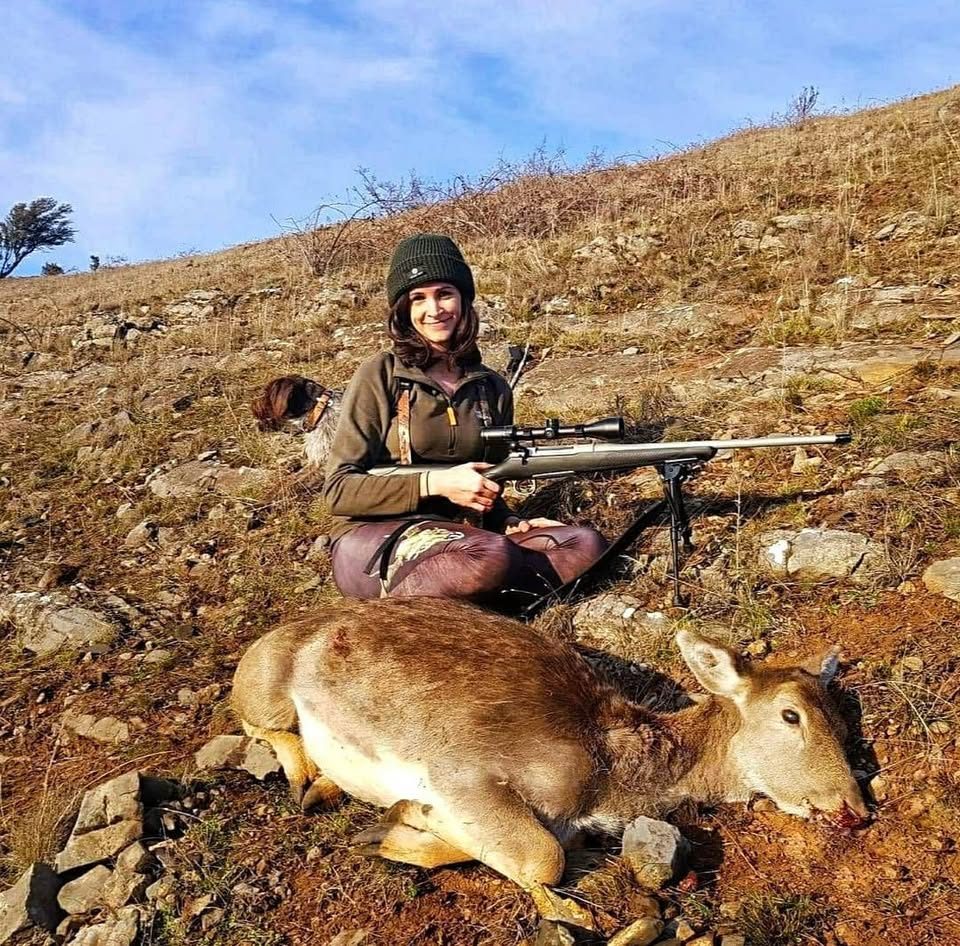
Shot Placement: Grab a Pen
Beth's favourite beginner exercise costs the price of a magazine. Buy a hunting magazine (she's biased towards Wild Deer, but any will do) and go through the photos and trail-cam shots of live deer. With a pen, mark where you'd place your shot on deer standing broadside, quartering away and quartering towards. Then take it to an experienced hunter you trust, or to your local ADA branch meeting, and ask them to check it.
You might get them all right and walk away with a heap more confidence. You might get a couple badly wrong and be very grateful you found out on paper.
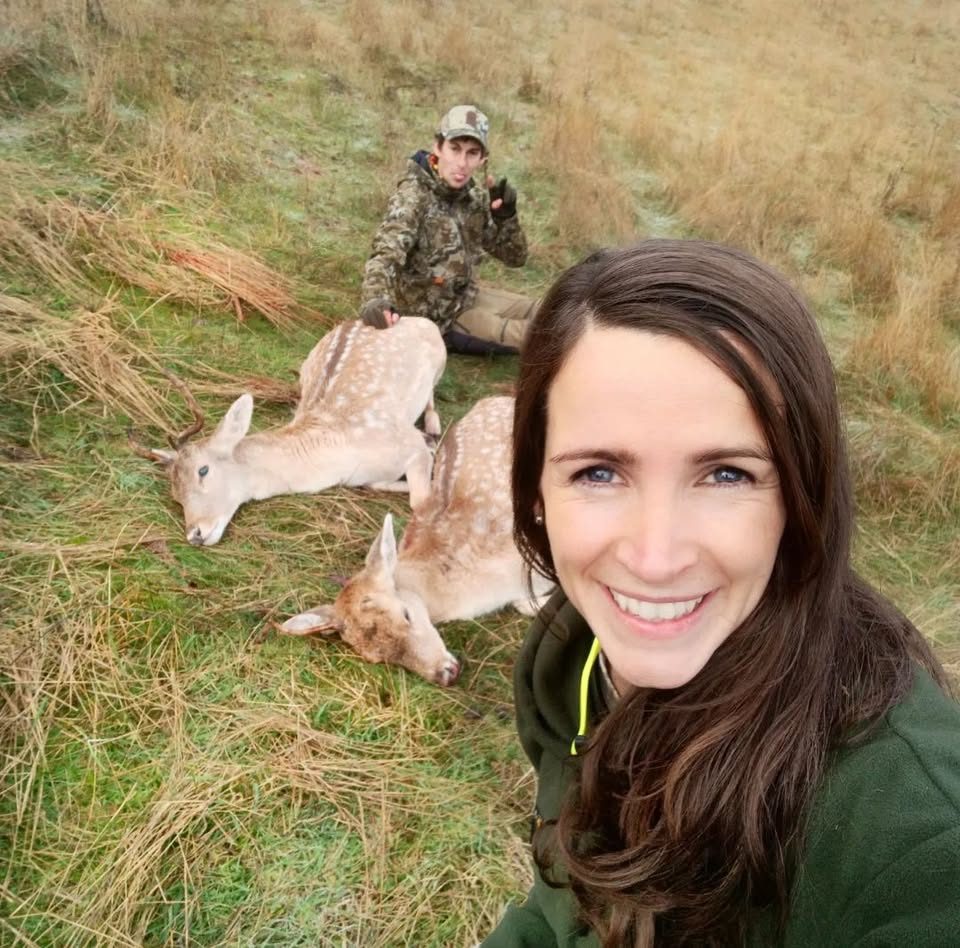
Beth aims for the organs, heart and lungs. On a broadside sambar, an animal about the size of a stock horse, that target is about the size of your head. On a fallow, think more like a cake plate. When a deer quarters away or towards you, the organs sit differently relative to what you can see, so your aim point shifts along the body to reach them.
The Shots Nobody Posts
Beth is honest about gut shots. If you're new, she says, there's a chance you'll make one at some point. A gut-shot deer often runs, then stops or sits because it feels sick, and it can absolutely get up and go again. It will die, but not quickly, and it may be very hard to find. Some of hers still haunt her.
We talked about how social media makes it look like every hunter hits the engine room every time. It just isn't true. The most experienced hunter in the field can still miss, clip a leg or hit a tree they didn't see behind the deer. Wind, a rifle not quite settled in the shoulder, a rangefinder that wobbled with your breath. Hunting will humble everyone.
Which is why the shot you don't take matters just as much. Beth described a fallow doe recently that kept stepping behind trees, playing chicken with her, while Beth moved position after position and felt herself getting more and more wound up.
"I just said, not today, darling. You've won this one. I don't want to take a shot I'm not comfortable with."
Beth HolleleyShe's felt pressure to shoot before and held off, including times she really needed the meat. She has never once regretted it.
Breathing and Buck Fever
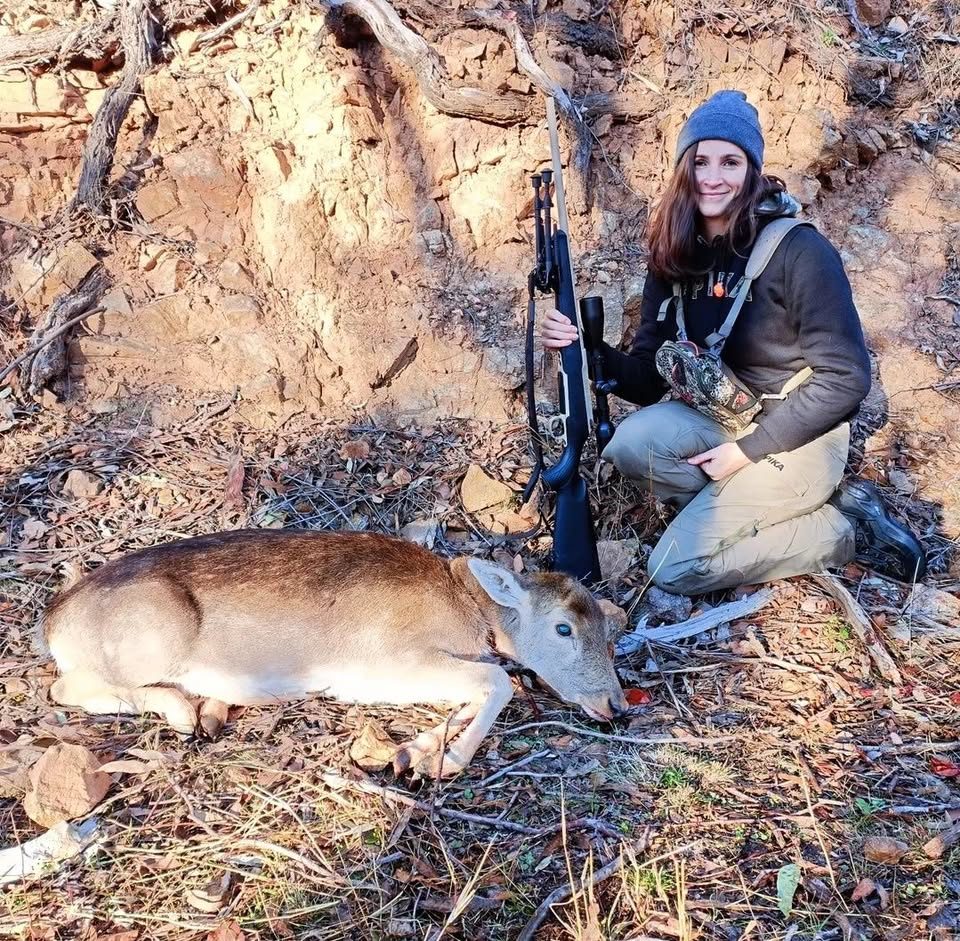
The more you want a particular deer, the more adrenaline floods your body. Your breathing gets ragged, you lock up, and your crosshairs drift over the deer and under it with every breath. It doesn't have to be a buck to give you buck fever, either.
Beth wants her crosshairs completely still as she moves to the trigger. That comes with practice, and with giving yourself permission to take a moment. On a recent hunt she had to sneak past a mob of sheep, one stood up and stared at her, and by the time she set up on the deer she could feel how tense she was. Her solution: shake it off, get comfortable, level out.
If the deer doesn't know you're there, an extra thirty seconds costs you nothing. They're not going to vanish.
Wind: If They Can Smell You, It's Over
Then Beth added the one she says might matter more than anything else on her list. If deer can smell you, they're gone. And kangaroos that have been around shooters will tip off every other animal in the area too.
She checks the Bureau of Meteorology app, which breaks wind direction down hour by hour for where she's hunting. But she doesn't trust it blindly. When she gets out of the car, she walks around it and feels where the wind is actually going. If it's blowing towards where she wants to hunt, she gets back in the car and goes somewhere else.
"Doesn't matter if you don't think you stink. We stink. They know us so well."
Beth HolleleySambar evolved alongside big cats, so they're tuned to pick up the smallest movement. Beth once watched a hind stand at the edge of the scrub for ten minutes, staring at a single gum leaf spinning on a thread of spiderweb 200 yards away, just to be sure it wasn't a threat. There's a reason they're called the ghosts of the bush.
Let the Bush Talk to You
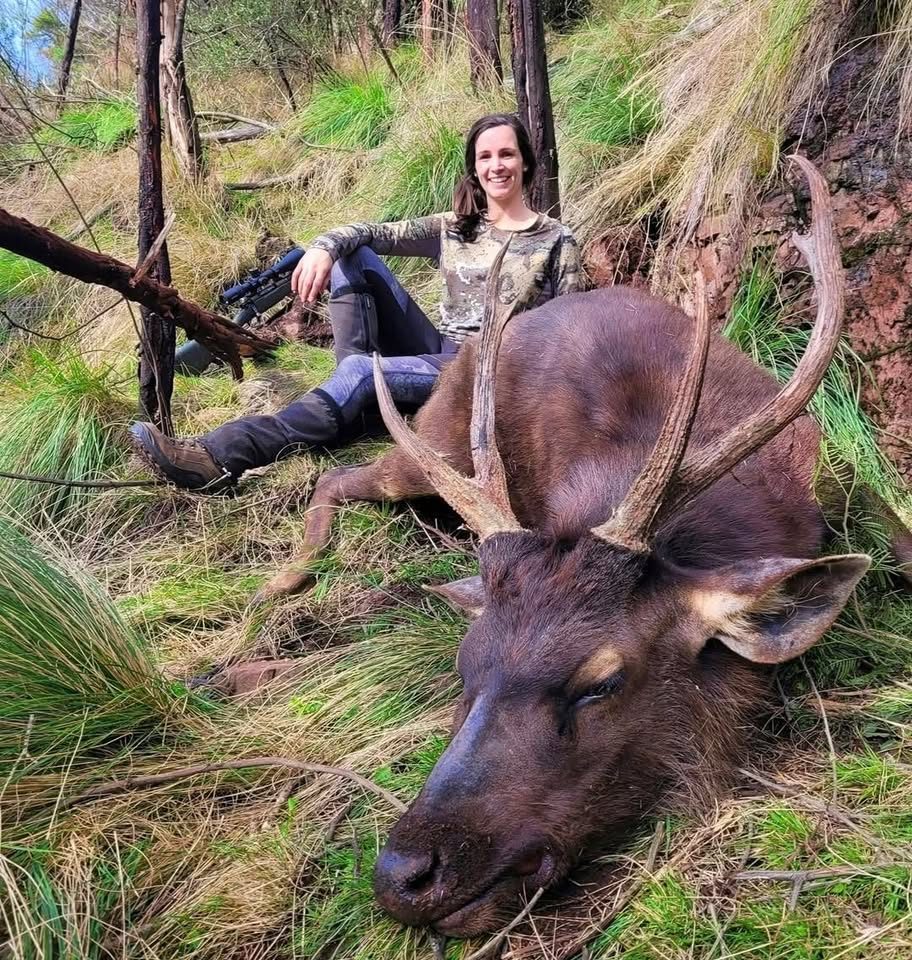
Kookaburras are Beth's favourite bushland informants. When they go off, they're watching something move. If you hear them in one spot and then further along, you know which way the animal is travelling. The catch is that they'll do the same for you, so when one's right overhead, you may as well give it a wave.
Her general rule: if a bird call is annoying you, it's probably an alarm call. She once sat under what looked like the perfect tree overlooking a gully, only for the cockatoos above to start screeching. When she moved off, they stopped. They'd been telling the whole valley she was there.
Closing the Distance
Spotted a deer at 500 yards and you're not comfortable at that range? Range something between you and it. If there's a log at 150 yards you can get behind, you know the shot from there will be about 350.
From there, use whatever the landscape gives you. Stand tall and slim beside fence posts and move along the line slowly. Put a single tree between you and the deer and walk straight at it. Use the contours of hills to hide your silhouette, get around the other side, then belly-crawl up. Be careful under gum trees, where crunchy leaf litter can give you away. And above all, don't rush. Movement is what they pick up.
If a deer half-spots you, freeze. Don't turn your head, don't move fast. As long as it can't smell you, it isn't over.
Her First Sambar
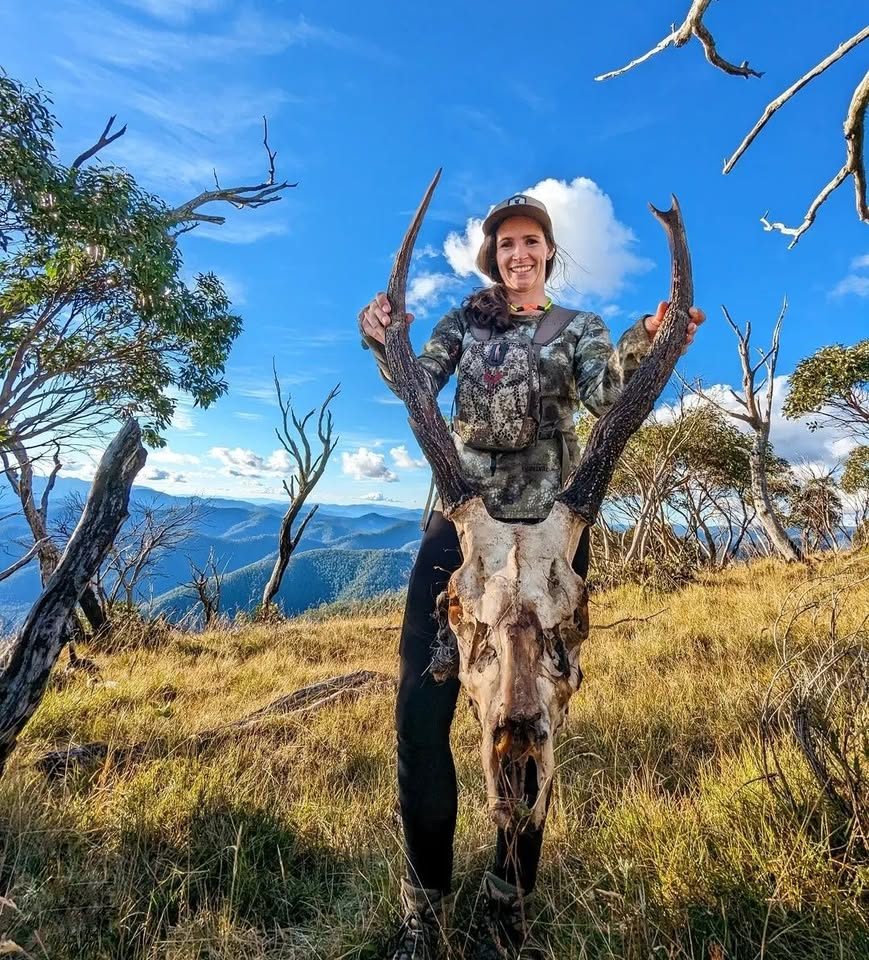
Beth's first sambar came on a hunt with her then father-in-law, a hunter since 18 who, with stiffer knees these days, carried two tiny camp chairs all the way up the ridge. She thought it was ridiculous until they sat down above a thick gully of blackberry and scrub with a creek at the bottom and an open green patch beyond.
A stag crossed first and kept moving. Then a hind stepped out. He told her to wait for broadside. She did, took the shot off a shooting stick and hit exactly where she meant to. Her first feeling was relief: having started out not wanting to see an animal shot, a clean kill meant everything to her. Then awe at the size of her, and the backstraps. And one strange detail: the hind had small stubs on her head, like the start of antler coronets. Beth has never seen it on a hind since.
(And yes, the camp chairs stayed on the ridge. The rifle came with them, though. Always take your rifle with you when you go to your deer, in case it needs another shot.)
After the Shot
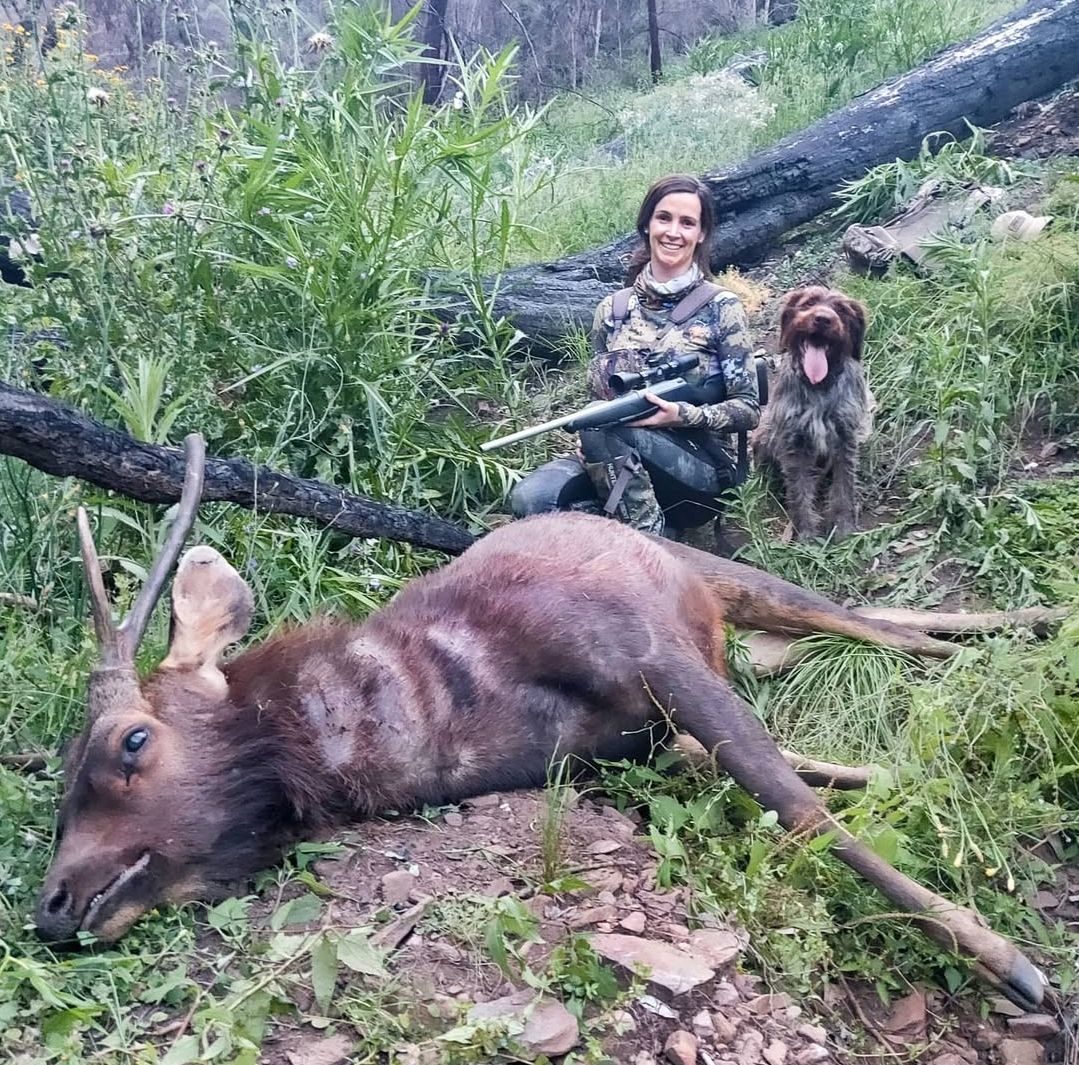
Beth's final tip was the one she most wanted every listener to hear. Don't run to your deer.
A deer that drops isn't necessarily dead. Adrenaline can carry it back to its feet, and if you've already stood up and started walking over, or you've turned your attention to another deer in the hope of a second shot, you can lose it. That's an animal dying slowly somewhere you may never find it.
Sit, stay, wait, watch, set up
- Chamber another round straight away, no matter how confident you are in the shot.
- Watch with your eyes first. Recoil makes it hard to follow the deer through a magnified scope.
- When it stops, get back on it through the scope. Re-range it if it's moved and get comfortable, so you're ready if it stands up.
- Look for the small signs. At high magnification you can see whether its eyes are closing or its ears are still twitching.
- Only get up once it's been still for a while. Then remember your rifle is loaded. Unload and check it before you walk.
If you do have to follow a blood trail, Beth picked up a brilliant technique hunting in Queensland with Jack Peacock and his mate Yanni. Working in pairs, one person stands on the last spot of blood and calls "blood". The other searches ahead until they find the next spot, calls "blood", and stays put. The first person then leapfrogs ahead. You never lose your last confirmed spot, even when the light is going and the adrenaline is high. Hunting solo, some people mark spots with flagging tape. Beth just makes sure she doesn't leave anything behind in the bush.
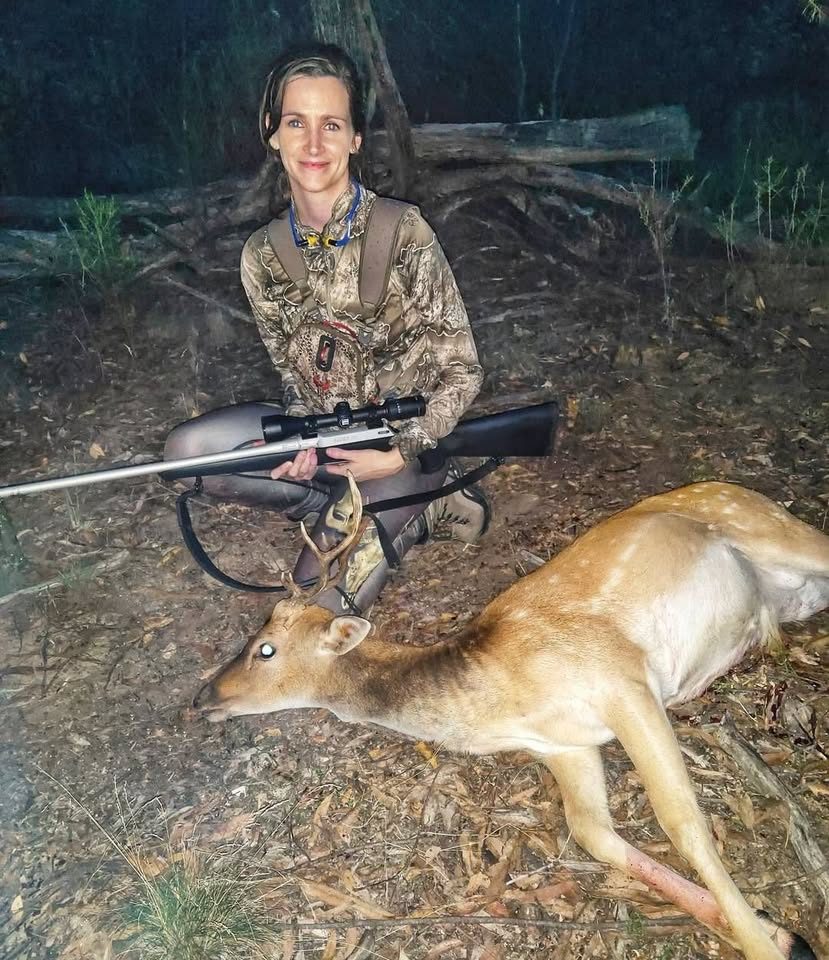
Butchering and Getting It Out
You've outwitted the deer and made a good shot. Now what? Butchering is harder than people expect, and Beth has been elbow-deep in a sambar leg searching for the ball joint more than once. She doesn't gut her deer. She takes the backstraps first, then the back legs, and on a sambar stag or a big hind, sometimes the front legs too. On fallow, the front legs are more work than they're worth. If your knife punctures the guts and contaminates a cut, leave that cut and move on to the next one.
A sambar back leg, backstraps and a head can add up to around 45 kilos. Beth weighs about 60. So she shared her technique for getting a heavy pack on safely without wrecking her back:
Beth's heavy-pack lift
- Use a slope. Set the pack slightly uphill of you and sit down in front of it.
- Buckle everything while you're sitting: shoulder straps, hip belt and chest strap, all tight.
- Roll onto your side, then onto all fours.
- Bring one knee up, then push up to standing. Use your squats.
Then start the long walk back to the car, which is always further than you remember.
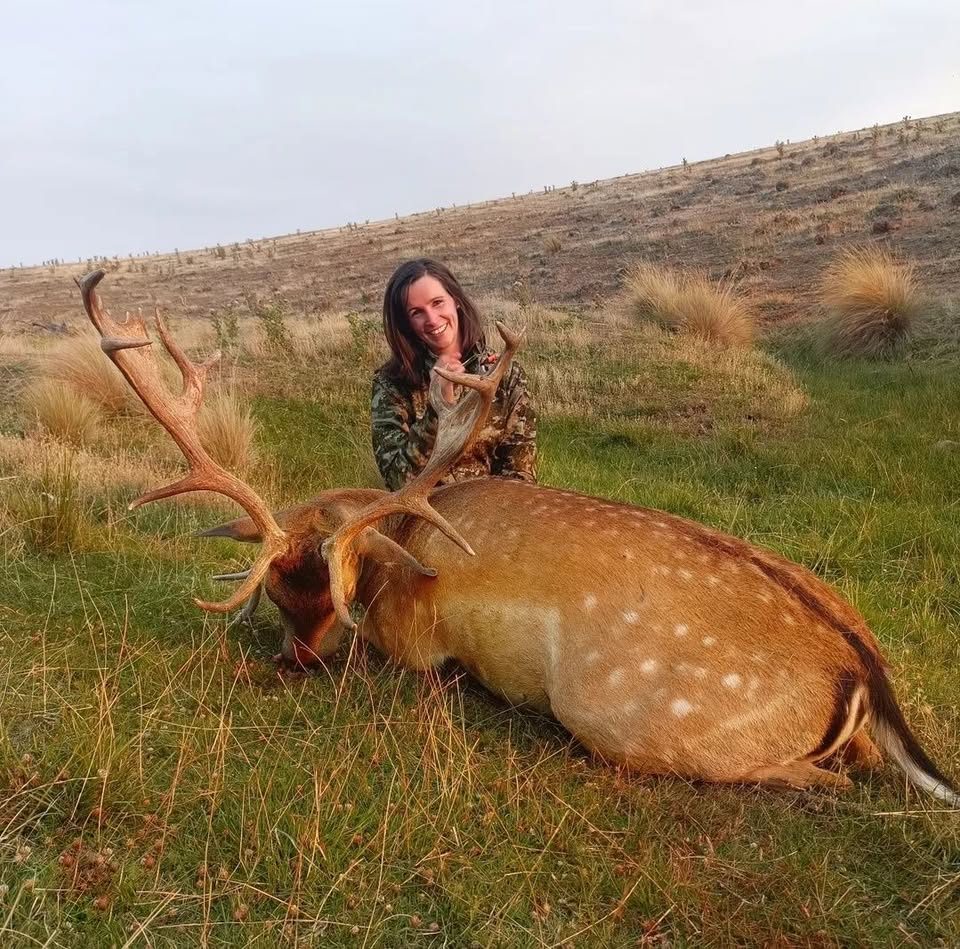
Where to Find Deer
Beth's best numbers have come from within about a kilometre of where state forest meets private property. Deer like to feed on private land, and how long they stay out depends on hunting pressure. Little pressure, and they'll feed well into the morning before drifting back into the forest. Lots of pressure, and they'll be gone at first light. She loves a cleared fire break along the boundary, where she can walk and glass into the paddocks.
Game trails are worth learning to read. Animals use the easiest paths, which become worn dirt tracks clear of sticks. Walking them yourself means quieter footsteps and fewer spiderwebs in the face.
Two research tips that surprised us both. First, if you're chasing a particular species, look up the government feral deer control reports for your state. They map where populations of red, fallow, sambar and hog deer are concentrated. Second, in Victoria, the More to Explore app has a hunting layer showing in purple where you can hunt, which you can cross-reference with Google Maps.
The Sit-and-Wait Setup
Beth sees two kinds of hunters: the active stalker who moves through the bush and takes quicker shots, and the sit-and-wait hunter who settles in somewhere with a big view. Most of us are a bit of both. For sit-and-wait hunts, she gets into position an hour and a half to two hours before last light.
Then comes her best tip of the episode. Look for the game trails coming out of the scrub, find the furthest one you'd be comfortable shooting to, and range it. Set your rifle up for that spot in advance: bipod out, something solid under the stock, scope dialled for that distance. If a deer steps out close, it's easy to swing to. If it steps out at the far trail, the hardest shot, you're already set.
Range all the trails in front of you while you wait, so you already know which ones need adjusting and which don't. It cuts the time between seeing a deer and taking a good shot.
What's in Beth's Kit
Most of Beth's deer have fallen to her .308 with a Swarovski scope and a ballistic turret, which uses coloured markings for set distances so you're not counting clicks under pressure. She's recently moved to a Sauer in .300 Win Mag with a Zeiss scope, courtesy of her sponsor OSA. That one requires counting clicks, so she wrote her dial-up chart on a small card and taped it to the side of the stock.
"Some people might think it looks tacky, but I find it so damn practical. I don't care."
Beth HolleleyAnd the lesson she wishes she'd learned earlier? She once drove from 4am to her hunting spot, arrived before first light with the birds starting up, opened her boot to grab her locked ammo tin, and realised the key was sitting on top of her gun safe at home. Now the key lives zipped inside her bino harness, the one thing she never leaves the house without.
We barely scratched the surface of Beth's stories. There's a sambar hunt she thought she might not walk away from, and plenty more where that came from. She's agreed to come back, so watch this space.
In the meantime, pick up a copy of Wild Deer magazine next time you're at the newsagent, follow Beth's adventures, and as always, keep doing the things that light you up.
Follow Beth
Beth shares hunting footage, tips and the occasional stuff-up on Instagram at @bethholleley. If you have a hunting story or photos to share in Wild Deer magazine, including what went wrong, she'd love to hear from you at beth@wilddeer.com.au (that's wild deer with two Ds).
Beth thanks her supporters H&S Firearms in Sale, OSA (Outdoor Sporting Agencies), Sauer, Minox, Zeiss, Tatonka, Stoney Creek, Crispi and Ridgeline.
Listen to Episode 38
Beth Holleley on gear, shot placement, wind, buck fever and the lessons every new deer hunter needs.